Friday, October 30, 2026 · Edition updated 6:00 AM ETFRI, OCT 30 · 6 AM ET editionNext edition in Next --:--:--

Can you reverse aging? Where the research stands

What has been tried, in people and in animals, how far each idea has got, and who is working on it. We gather and explain; we don't judge.

Can aging be reversed? The short answer

Some effects of aging have been reversed in animals such as mice. In people, the approaches aimed at reversing aging are still being tested. How far each has got: cell reprogramming, stage 2 (small studies in people); plasma exchange and young blood, stage 3 (large studies in people); regrowing the thymus, stage 2 (small studies in people); clearing old cells, stage 2 (small studies in people); gene therapies, stage 2 (small studies in people). None has reached stage 4, widely recommended. Some drugs and supplements, and lifestyle programmes such as exercise and diet, have reached stage 4, but are studied for slowing aging, not reversing it.

Stages come from the research counted on each topic page below. How stages work

Common questions

Is aging a disease?

The World Health Organization's disease classification, the ICD, does not classify old age as a disease. Its “old age” category is used to code unclear statements by doctors on death certificates and medical records. In ICD-11 that category was renamed “Ageing associated decline in intrinsic capacity” to prevent misunderstandings. Some researchers are testing aging itself as a target: the main outcome of the TAME trial of metformin was shaped by advice from the US Food and Drug Administration (FDA) on aging-related uses.

Sources: World Health Organization: Frequently asked questions: “Old age” ↗ · Innovation in Aging: Trials of Geroscience-Based Therapeutics: the TAME example (2018) ↗

Can you reverse aging?

In mice, changing levels of certain molecules called transcription factors reversed some effects of aging. In old mouse livers, raising one of these molecules, EZH2, shifted gene activity toward a younger pattern and reduced fat buildup and scarring. That work carries a warning: these molecules affect many genes, so changing them can have unintended effects, and much more study is needed before use in people. In sea squirts, short electrical pulses extended life, with about 75% of treated animals alive and healthy a year later. Researchers say it is an open question whether the electrical approach can be applied to humans.

Sources: nih.gov: Manipulating gene activity to reverse aging ↗ · woods.stanford.edu: Electrical pulses reverse aging in sea squirts, offering clues for extending human longevity ↗

What is biological age?

Biological age reflects the state of a person's body, not just the time since birth. One NIH article describes it as the damage that builds up across tissues and organs. People of the same calendar age can differ a lot in health, which is one reason the idea matters. A review notes there is no agreement on the best way to measure it, and different methods can give different results.

Sources: ncbi.nlm.nih.gov: New insights into methods to measure biological age: a literature review - PMC ↗ · nih.gov: Gauging biological age to predict future health ↗

Has anyone reversed their biological age?

Some small studies suggest biological age measures can go down, but the evidence is early. In a pilot trial of 43 healthy men aged 50-72, an 8-week diet and lifestyle program was linked to a 3.23-year lower DNA-based age than the control group. Within the treated group, the average drop was 1.96 years, which only showed a strong trend toward significance. In a separate analysis of clinical trial blood samples, three cycles of a fasting-mimicking diet were linked to a 2.5-year drop in median biological age. Harvard-led researchers found stress from surgery, pregnancy or severe COVID raised biological age signs, which were reversed after recovery. The authors note these clocks are biomarkers that may reflect biological age or could be driven by other factors not yet identified.

Sources: PubMed abstract: Potential reversal of epigenetic age using a diet and lifestyle intervention: a pilot randomized clinical trial. ↗ · PubMed abstract: Fasting-mimicking diet causes hepatic and blood markers changes indicating reduced biological age and disease risk. ↗ · news.harvard.edu: How dynamic is biological age? ↗

What has been tried

Measuring it: biological ageBefore anything can be called age reversal, it has to be measured. Aging clocks estimate how old your body seems from blood tests or chemical tags on your DNA.Tests and clocks →Cell reprogrammingSwitching on a few genes (the Yamanaka factors) can make cells act younger. Scientists are testing whether short, partial doses can do this safely in the body.2Furthest so far: stage 2, small studies in peopleMost advanced: ER-100 by Life Biosciences, in a Phase 1 trial in peoplePlasma exchange and young bloodStudies in mice that shared blood between old and young animals led to trials of replacing plasma, the liquid part of blood, in older people.3Furthest so far: stage 3, large studies in peopleRegrowing the thymusThe thymus, a gland that trains immune cells, shrinks with age. A few small trials have tried to regrow it.2Furthest so far: stage 2, small studies in peopleClearing old cellsOld, damaged cells that stop dividing build up with age. Senolytics are drugs and compounds meant to clear them out.2Furthest so far: stage 2, small studies in peopleDrugs and supplements studied for slowing agingMedicines first made for other uses, and supplements, that researchers are testing against aging itself.4Furthest so far: stage 4, widely recommendedLifestyle programmesSome studies tested diet, exercise and sleep programmes and reported changes in biological age. Most were small.4Furthest so far: stage 4, widely recommendedGene therapiesAdding or changing genes to target processes linked to aging. Almost all of this work is in animals so far.2Furthest so far: stage 2, small studies in people

Claims and the research behind them

Public claims and headlines, quoted word for word from the article, next to how far research on what was tested has got. We don't judge the people or companies involved.

“Drug giants Eli Lilly and Novo Nordisk say patients taking their drugs age less quickly, according to readouts from molecular “aging clocks.”

Eli Lilly and Novo Nordisk · MIT Technology Review · Oct 6, 2026 · Read the article ↗

4What was tested: GLP-1 drugs, research stage 4 (widely recommended).

“Aging has a relatively simple explanation and is apparently reversible," wrote Sinclair.”

David Sinclair · MIT Technology Review · Jan 27, 2026 · Read the article ↗

2What was tested: Cell reprogramming (Yamanaka factors), research stage 2 (small studies in people). The article says it was tested in human volunteers.

“Our bodies hold a backup copy of our youth that can be triggered to regenerate, said Sinclair, the senior author of a new paper showcasing the work of his lab and international scientists.”

David Sinclair · CNN · Jan 12, 2023 · Read the article ↗

2What was tested: Cell reprogramming (Yamanaka factors), research stage 2 (small studies in people). The article says it was tested in mice.

“Although the increase in lifespan was modest, the company says the research provides a demonstration of age reversal in an animal.”

Rejuvenate Bio · MIT Technology Review · Jan 9, 2023 · Read the article ↗

2What was tested: Cell reprogramming (Yamanaka factors), research stage 2 (small studies in people). The article says it was tested in mice.

The latest research

47New papers on age reversal in the last 30 days
55Papers in our database
19Trials recruiting now
Summary of earlier studies · Molecular neurobiology

Red light therapy and aging: what a review of past studies found

This review looks at past studies of red and near-infrared light on aging-linked conditions.

Original title: Red Light Therapy and Mitochondrial Rejuvenation in Age-Related Disorders.
Study in Genetic data plus a large US health survey of postmenopausal women · Biology of sex differences

Hormone replacement therapy and survival, linked to aging clocks and blood sugar

This study linked estrogen signals and hormone therapy to slower aging clock markers and lower death risk.

Original title: Hormone replacement therapy through the lens of epigenetic clock: estrogen signals, glycemic status, and lifespan.
Trial in 10 women aged 50 to 65 at one clinic in Montreal · ClinicalTrials.gov

Laser alone versus laser with ultrasound for facial skin aging in women

This is a planned small trial that is still recruiting, and no results have been posted yet.

Original title: Ultraformer MPT Combined With Fractional CO2 Versus Fractional CO2 Alone for Facial Rejuvenation
New trial · ClinicalTrials.gov

A planned study comparing two skin filler treatments for aging skin

This is a trial sign-up listing, and it is still recruiting people.

Original title: PLLA and CaHA-R for Aesthetic Rejuvenation
Summary of earlier studies · Molecular biology reports

How cancer treatment can leave behind aging cells that affect the tumor and immune system

This review looks at how cancer treatments can leave cells in a state of stress called senescence.

Original title: Reshaping the tumor immune microenvironment via therapy-induced senescence: senescence-associated secretory phenotype networks and senolytic strategies.
New trial · ClinicalTrials.gov

Testing whether medicines and a skin treatment can lower biological age

This study is a trial that is still signing up people by invitation, and no results have been posted yet.

Original title: Systemic and Topical Geroprotective Rejuvenation Assessed by START/REST Aging Clocks

All the latest research →

What experts say

“It gives us a lot of control,” says Rosenzweig-Lipson. “And the ability not just to turn it on, but to turn it off and not leave on expression longer than is necessary to rejuvenate the cells.”

Sharon Rosenzweig-Lipson, chief scientific officer at Life Biosciences · Scientific American · Jun 13, 2026 · on Cell reprogramming (Yamanaka factors) · Source ↗

“Since then, Life Biosciences has studied the approach in rodents and monkeys and has not seen serious adverse effects of the treatment, says Sharon Rosenzweig-Lipson, chief scientific officer at the company.”

Sharon Rosenzweig-Lipson, chief scientific officer at Life Biosciences · Scientific American · Jun 13, 2026 · on Cell reprogramming (Yamanaka factors) · Source ↗

“Reprogramming has a big upside if it can be used safely in people,” says Matt Kaeberlein, co-founder of Optispan, a longevity-focused preventative medicine company in Seattle, Washington. “The technology is still really early, and the potential for catastrophic side effects is high.”

Matt Kaeberlein, co-founder of Optispan, a longevity-focused preventative medicine company · Scientific American · Jun 13, 2026 · on Cell reprogramming (Yamanaka factors) · Source ↗

“TAME is not a moonshot. It’s not even about scientific achievement really, it’s more about political achievement. Metformin is a tool to get aging as an indication.”

Nir Barzilai, Head of the Institute for Aging Research at Albert Einstein College of Medicine; scientific director for AFAR · STAT · Aug 9, 2022 · on Metformin · Source ↗

“But it’s premature to make any clinical recommendations based on the results from our study. NMN needs to be tested in more people and for longer periods of time to determine if it has anti-ageing effects in humans,”

Samuel Klein, doctor and nutritional specialist at Washington University School of Medicine in St Louis, United States · Nature · on NMN (nicotinamide mononucleotide) · Source ↗

“Finding an effect in muscle tissue is very interesting and does demonstrate that NMN is not inert,”

Samuel Klein, doctor and nutritional specialist at Washington University School of Medicine in St Louis, United States · Nature · on NMN (nicotinamide mononucleotide) · Source ↗

Who's working on it

Companies in this area, in their own words, with their registered human trials. Listing a company is not an endorsement or investment advice.

Alkahest ↗

“Alkahest, a Grifols subsidiary, is a research and drug discovery company mining the deepest layers of plasma knowledge to inform the development of potential transformative therapies and solutions for patients.” (from its website)

Registered human trials as lead sponsor: 12 (Phase 2, No phase). ClinicalTrials.gov ↗

Calico ↗

“Our mission is said simply, yet it is quite ambitious. Calico is working to better understand the biology of aging and using those insights to advance foundational discoveries into potential medicines that enable people to lead longer and healthier lives.” (from its website)

Registered human trials as lead sponsor: 8 (Phase 1, Phase 2, No phase, Phase 1 and Phase 2). ClinicalTrials.gov ↗

Life Biosciences ↗

“Life Biosciences is a biotechnology company pioneering cellular rejuvenation using epigenetic restoration to reverse diseases of aging.” (from its website)

Registered human trials as lead sponsor: 1 (Phase 1). ClinicalTrials.gov ↗

Oct 8, 2026 · Life Biosciences (company press release)“The data demonstrated that a single intravitreal administration along with daily oral doxycycline was well-tolerated through Day 56 in all three participants and showed preliminary signals of improvement in visual field testing in two participants.” Source ↗

Altos Labs ↗

“Early experiments have shown that the ability of cells to resist stressors that give rise to disease can be restored. At Altos, we are focused on understanding how we can translate this science to help people live healthier lives.” (from its website)

No human trials registered on ClinicalTrials.gov as lead sponsor.

Cambrian Bio ↗

“Cambrian Bio is developing drugs targeting the underlying drivers of the metabolic decline and dysfunction experienced by every person.” (from its website)

No human trials registered on ClinicalTrials.gov as lead sponsor.

Juvenescence ↗

“Juvenescence is a clinical-stage drug development company dedicated to extending healthy lifespan through innovative medicines” (from its website)

No human trials registered on ClinicalTrials.gov as lead sponsor.

Loyal ↗

“At Loyal, our approach is to help dogs live longer and stay healthier as they age by developing drugs that target the underlying processes that lead to age-associated disease and disability.” (from its website)

No human trials registered on ClinicalTrials.gov as lead sponsor.

NewLimit ↗

“NewLimit is inventing medicines to add healthy years to people's lives.” (from its website)

No human trials registered on ClinicalTrials.gov as lead sponsor.

Jun 2, 2026 · STAT“Longevity startup NewLimit plans to launch its first clinical trial of a liver medicine after raising a staggering $435 million in new funding.” Source ↗

Rejuvenate Bio ↗

“Targeting the root causes of aging to create life-changing treatments for chronic conditions affecting both companion animals and humans.” (from its website)

No human trials registered on ClinicalTrials.gov as lead sponsor.

Retro Biosciences ↗

“Retro Biosciences develops therapies that meaningfully reverse age-related diseases.” (from its website)

No human trials registered on ClinicalTrials.gov as lead sponsor.

May 22, 2026 · STAT“The company is currently running its first clinical trial — testing a pill designed to enhance the body’s ability to better clear out protein aggregates in patients with Alzheimer’s disease.” Source ↗

Turn Biotechnologies ↗

We couldn't read a description from its website.

No human trials registered on ClinicalTrials.gov as lead sponsor.

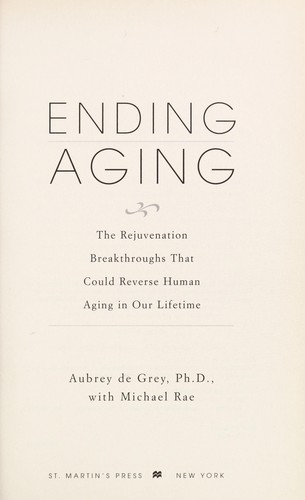
Books on age reversal

All books about living longer →

This is general information gathered from the sources listed, not medical advice. Talk to your doctor before starting anything new.