What Jan is working on now
He studies how genomes become unstable with age, in particular the mutations that build up in the body's cells over a lifetime. Wikipedia ↗
Predictions and stated views
Dated by when they were said. Their words where we could read them, then our plain version. The site takes no side on whether they will come true.
- —No date given
A fixed limit to human lifespan
“Our results strongly suggest that the maximum lifespan of humans is fixed and subject to natural constraints.”
His team concluded that the maximum human lifespan is fixed by natural limits: gains in survival fade after 100, and the oldest age at death stopped rising in the 1990s. Said October 5, 2016. Milholland and Vijg, Nature, 2016 ↗
What Jan has done
- 1989
Created the first transgenic mouse models for studying mutations in living animals. Wikipedia ↗
- 2016
With Xiao Dong and Brandon Milholland, analyzed global demographic data and found that gains in survival fade after 100, and that the age at death of the world's oldest person had not risen since the 1990s (Nature). Milholland and Vijg, Nature, 2016 ↗
Videos by and about Jan
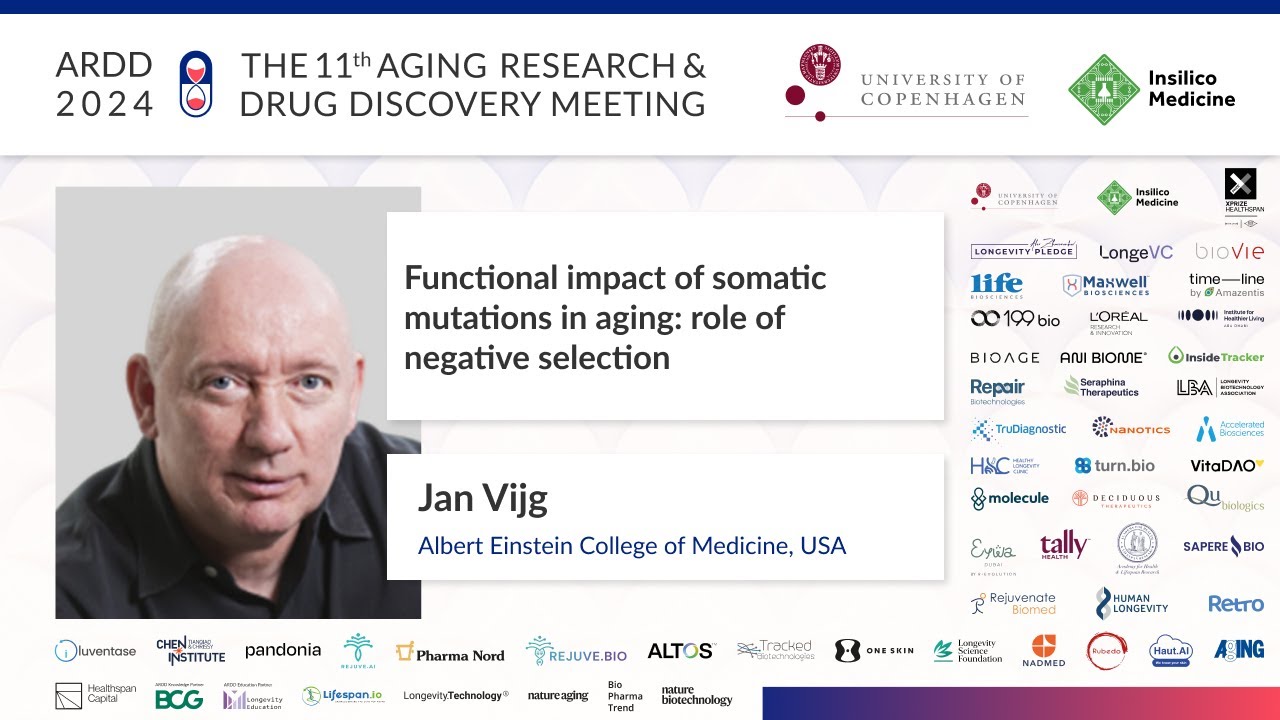
 Talk · 29 minJan Vijg - Stochasticity in aging: pitfalls on the road to life extensionARDD · Sep 18, 2020Why chance damage makes life extension harder than it looks.
Titles, channels and dates are YouTube's own, checked on YouTube. We link to these videos; we don't make or endorse them. A video that stops playing is taken off this page automatically.
Also in how long can people live?
- S. Jay OlshanskyEmeritus professor, School of Public Health, University of Illinois ChicagoArguing, with the numbers, that radical life extension is implausible this century unless aging itself is slowed2 dated forecasts3 videos
- Steven AustadProtective Life Endowed Chair in Healthy Aging Research, University of Alabama at Birmingham; senior scientific director, American Federation for Aging ResearchStudying the animals that age slowest, and betting that someone alive today will reach 1501 dated forecast2 videos